
It is a heart-sinking moment for any property owner. You see a notification for a new booking, but then the follow-up alert arrives: Declined Card Payment.
While your first thought might be that the guest doesn’t have the money, a “fail” isn’t always a “no.” In the world of travel, declined card payments are often just temporary.
Why do card payments fail? (The plain-English version).
When a card is declined, the bank is usually trying to be helpful, not difficult. Specifically, they are looking for anything that seems out of the ordinary.
Common reasons for a decline include:
- Daily spending limits: A guest might have already paid for flights or a car rental that morning, hitting their bank’s daily limit.
- International “travel blocks”: If a guest from London suddenly tries to pay a deposit in Hermanus, their bank might freeze the transaction until they confirm it’s really them.
- Simple typos: Entering a card number or expiry date incorrectly is easy to do on a small smartphone screen.
- 3D Secure timeouts: As we discussed in our guide to 3D Secure payments, if a guest misses the approval prompt on their phone, the payment will fail.
- Insufficient funds: Sometimes the timing is just off, and the guest needs to move money between accounts.
Consequently, your first step should always be to assume it’s a technical glitch rather than a bad guest.
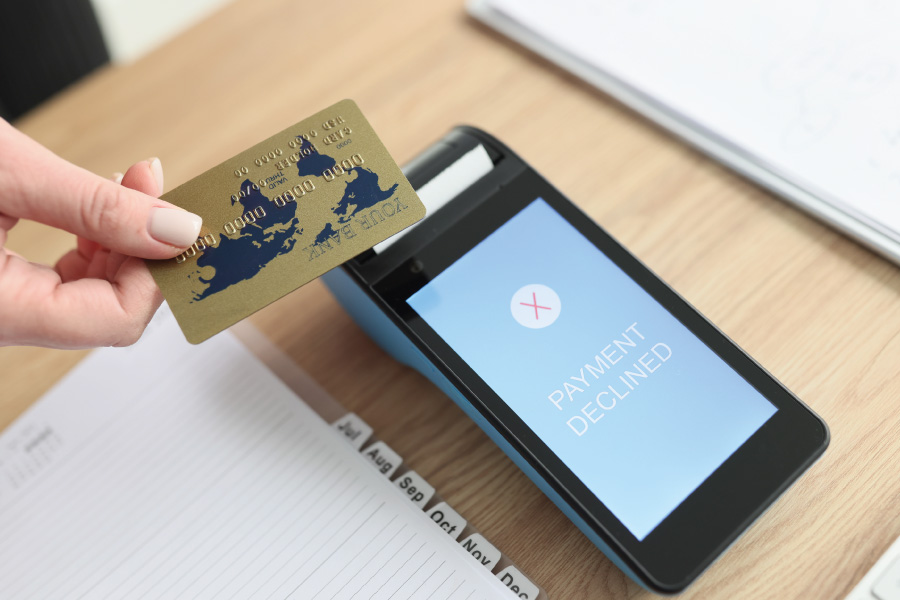
The 3-step recovery plan to save your booking.
When a payment fails, speed is your best friend. If you wait too long, the guest might think the booking didn’t work and start looking at other properties. Therefore, you should have a simple recovery workflow ready to go.
1. The “Helpful Check-in”
Don’t send a cold, automated “Payment Failed” email. Instead, send a personal, friendly message. You want to sound like a supportive partner, not a debt collector.
Try this WhatsApp or email template:
“Hi [Guest Name], we are so looking forward to welcoming you to [Property Name]! We noticed there was an issue with the card payment for your deposit. This can happen with travel bookings — usually, the bank just needs a quick ‘thumbs up’ from you. Would you like me to send a new secure link for you to try again?”
2. Offer a different way to pay.
If the card continues to fail, offer an alternative. For example, for local South African guests, an EFT is a great backup. For international guests, suggest they try a different card or give their bank a quick call to “allow” the transaction.
Specifically, you can send them a secure card payment link which allows them to try a different card without you ever having to see their private details.
3. Set a “Grace Period”
Your payment policy should clearly state how long you will hold a room while waiting for a payment. However, being a little flexible here can build huge loyalty. Tell the guest: “I’ll hold the room for you for the next 24 hours while you sort it out with the bank.” This takes the pressure off and shows you trust them.
What you should never do when a card fails.
In the heat of the moment, it’s tempting to try and “fix” the problem manually. You might feel pressured to get the money in quickly. But, you must protect your business and your reputation by following a few simple rules.
- Never take card details over the phone: It might seem helpful, but it is a major security risk. Instead, stick to your PCI compliance basics and use secure links.
- Don’t ask for a photo of the card: This is a big “no” in the hospitality industry. It’s not secure and can lead to your merchant facility being suspended.
- Don’t get frustrated: Remember, the guest is likely just as frustrated as you are. A calm, professional approach will always get the payment settled faster.
How NightsBridge Pay helps you stay in control.
One of the biggest benefits of an integrated system is that you aren’t left in the dark. Specifically, NightsBridge Pay notifies you the moment a payment is declined.
It gives you the tools to act fast:
- Instant Alerts: You know about the decline before the guest even puts their phone down.
- Easy Re-tries: You can send a new payment link with two clicks.
- Clear Records: Your guest house accounting stays updated so you don’t accidentally double-charge a guest who tried twice.
Most importantly, it keeps the process professional. When the tech works smoothly, you look like an expert, even when the bank is being difficult.
Final thought: It’s all about the relationship.
A declined card is just a conversation starter. By handling it with warmth and efficiency, you prove to the guest that they are in good hands. In fact, some of the most loyal guests are the ones who had a payment “hiccup” and were impressed by how helpfully the owner handled it.
Read next: